
Flora Fountain: The Heart of South Mumbai’s Heritage
Standing at one of the busiest intersections in Mumbai, Flora Fountain is more than just a beautiful structure; it is the meeting point of the city’s past and present. Surrounded by majestic heritage buildings and bustling streets, it serves as a silent witness to Mumbai’s evolution from a colonial port to a global metropolis.
1. Introduction & Location Overview
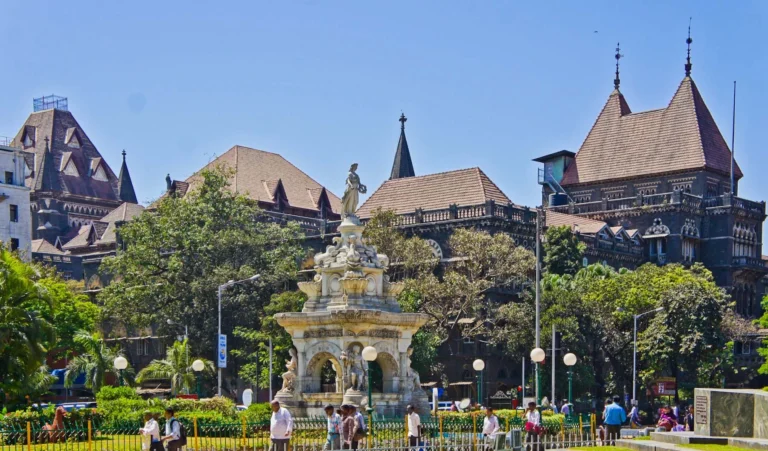
Flora Fountain is located at Hutatma Chowk (Martyr’s Square) in the Fort district of South Mumbai. It marks the confluence of five major roads, including Mahatma Gandhi Road and Dadabhai Naoroji (D.N.) Road.
Often referred to as the “Piccadilly Circus of Mumbai,” the fountain stands in a historic square where the original Church Gate of the old Mumbai Fort once stood. It is a central landmark that connects major tourist hubs like CSMT, Kala Ghoda, and Marine Drive.
2. Why This Heritage Site Is Famous
Flora Fountain is a celebrated icon of Mumbai for several reasons:
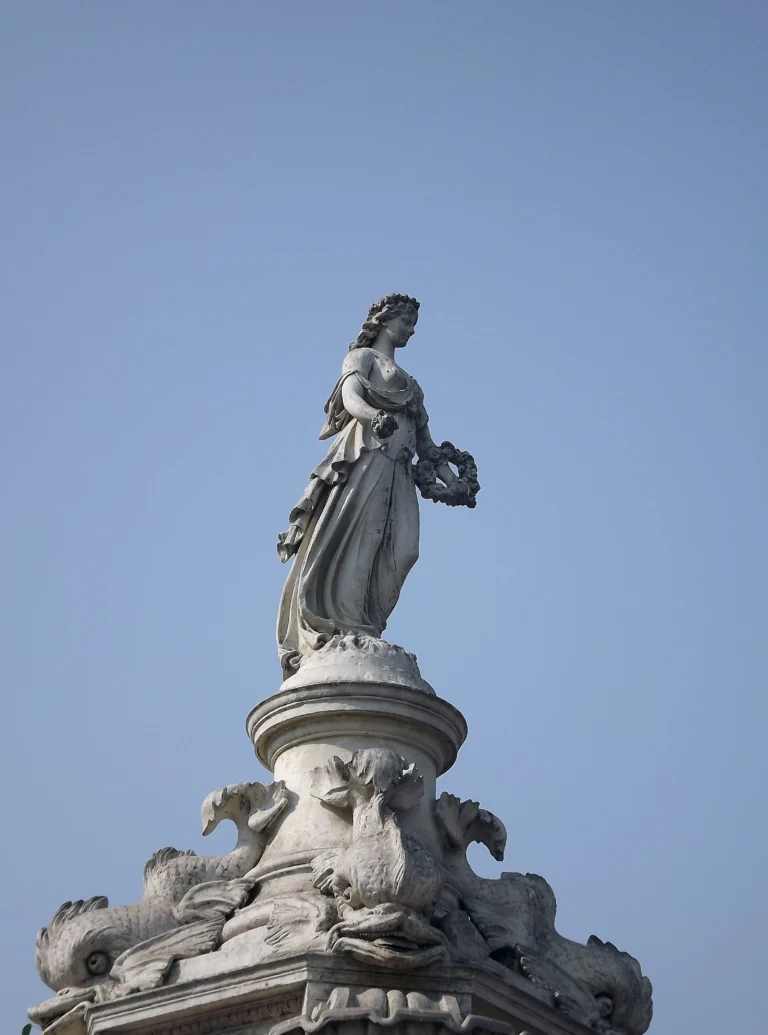
- The Roman Goddess: It is crowned by a magnificent statue of Flora, the Roman Goddess of Flowers and Spring.
- UNESCO World Heritage: It is a key monument within the “Victorian Gothic and Art Deco Ensembles of Mumbai” UNESCO site.
- Hutatma Chowk: The fountain shares its space with the Hutatma Chowk memorial, which honors the 105 martyrs who fought for the creation of the state of Maharashtra in 1960.
- Architectural Splendor: It is considered one of the finest examples of a fusion between Neo-Gothic and Indo-Saracenic styles.
3. Detailed History of the Heritage Site
The history of Flora Fountain began in 1864. Following the demolition of the old Fort walls by Governor Sir Bartle Frere to expand the city, the Agri-Horticultural Society of Western India commissioned the fountain.
Originally, it was intended to be named the “Frere Fountain” to honor the Governor himself, and it was supposed to be placed in Victoria Gardens (now Byculla Zoo). However, before its inauguration, the name was changed to “Flora,” and it was placed at the very spot where the city’s historic gate once stood. The total cost of construction was around ₹47,000—a massive amount in the 19th century—with significant funding from Parsi philanthropist Cursetjee Fardoonjee Parekh.
4. Architecture & Design Details
The fountain is a masterclass in colonial-era craftsmanship:
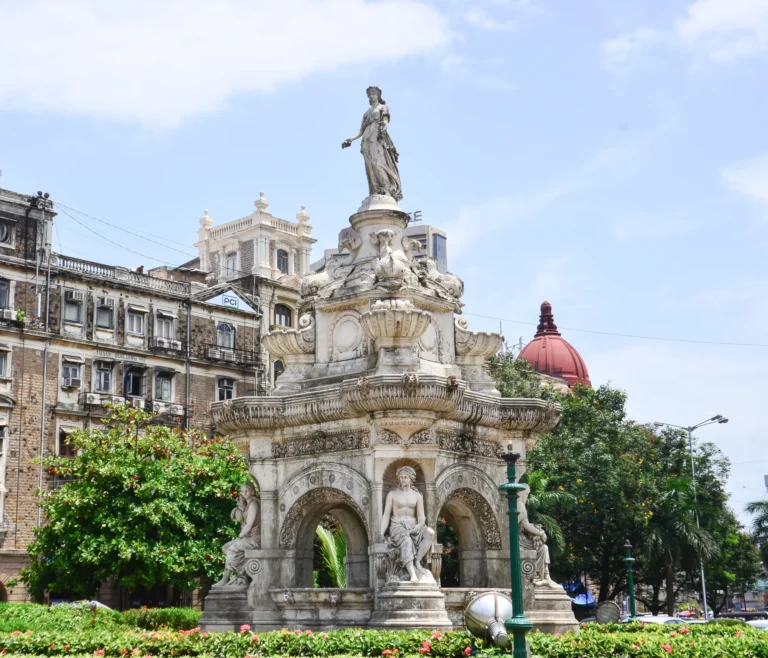
- Architect & Sculptor: It was designed by the British architect Richard Norman Shaw and sculpted in England by James Forsythe before being shipped to India.
- Material: The structure is made from Portland stone, imported from the UK. While it was originally off-white, years of oil paint layers were recently removed during a major restoration to reveal its natural stone beauty.
- Symbolism: At the top stands the 7-foot statue of Goddess Flora. Below her, at the four corners, are life-sized figures representing the four seasons: Spring, Summer, Autumn, and Winter.
- Intricate Details: The base is decorated with shells, dolphins, and mythical creatures, reflecting the “nautical” importance of Mumbai as a port city.
5. How to Reach the Heritage Site
Reaching Flora Fountain is very convenient as it is a major landmark in South Mumbai.
- By Local Train:
- Churchgate Station (Western Line): A 5-10 minute walk.
- CSMT (Central/Harbour Line): A 10-15 minute walk or a 5-minute taxi ride.
- By Bus: Numerous BEST buses stop at “Hutatma Chowk” or “Flora Fountain.”
- By Taxi/Cab: Every taxi driver in Mumbai knows “Flora Fountain.” It is well-connected to all parts of the city.
- From the Airport: It is approximately 22 km from the International Airport. Taking the Bandra-Worli Sea Link or the Eastern Freeway is the fastest way to reach.
6. Entry Fees, Timings & Permissions
- Entry Fee: There is no entry fee. It is a public monument located in an open square.
- Timings: It is accessible 24 hours a day.
- Photography: Photography from the street is free. However, professional commercial shoots may require permission from the Municipal Corporation of Greater Mumbai (MCGM).
7. Best Time to Visit
- Best Months: October to March (Winter) is the best time to explore the area on foot.
- Best Time of Day: Early Morning: To see the architecture clearly without the heavy traffic and crowds.
- Night (Highly Recommended): The fountain is beautifully illuminated with LED lights after sunset, making it a spectacular sight.
- Golden Hour: About an hour before sunset is perfect for photography.
8. Things to See at the Heritage Site
- The Statue of Flora: Look at the serene expression and the detailed carving of the Goddess.
- The Four Seasons Statues: Try to identify which figure represents which season based on the fruits or flowers they carry.
- Hutatma Smarak: The adjacent memorial featuring the bronze statue of a martyr holding a torch.
- Surrounding Heritage Buildings: The fountain is flanked by the Oriental Building, the Central Telegraph Office, and various historic banks.
9. Things to Do Near the Heritage Site
Flora Fountain is the gateway to some of Mumbai’s best experiences:
- Street Bookshops: The pavement along D.N. Road is famous for rows of second-hand booksellers. It’s a paradise for book lovers.
- Kala Ghoda Art Precinct: A 5-minute walk away, home to galleries like Jehangir Art Gallery.
- Fashion Street: A short walk for budget-friendly clothing and accessories.
- Café Culture: Visit the nearby Starbucks (one of the most beautiful in the world, located in a heritage building) or legendary spots like Kala Ghoda Café.
- St. Thomas Cathedral: The oldest Anglican church in the city is just a few steps away.
10. Cultural Importance & Visitor Experience
Flora Fountain represents the transition of Mumbai into a modern city. For locals, it is a point of reference for meeting friends or starting a heritage walk. For travelers, it offers a “European” vibe right in the middle of India. The contrast of the calm stone goddess against the rushing traffic and honking cars captures the true spirit of Mumbai’s energy.
11. Safety Risks & Things to Be Careful About
- Heavy Traffic: The intersection is extremely busy. Always use the pedestrian signals and be very careful when crossing the road to get closer to the fountain.
- Pickpockets: Like any crowded tourist spot, keep your belongings secure.
- Avoid Mid-day Heat: There is very little shade around the fountain, so visiting at noon can be exhausting.
12. Safety Precautions
- Use Subways: There are pedestrian subways nearby to cross the busy streets safely.
- Stay Hydrated: Carry water, especially if you plan to walk to nearby sites like the Gateway of India.
- Official Guides: If you want a deeper history, only hire recognized heritage tour guides.
13. Things to Carry Before Visiting
- Camera: A wide-angle lens is great for the fountain and the surrounding tall buildings.
- Comfortable Shoes: You will likely be walking a lot as you explore the Fort area.
- Small Change: Useful if you plan to buy books from the street-side vendors.
- Sunscreen/Hat: Essential for daytime visits.
14. Travel Tips
- Photo Tip: The best angle for a photo is from the pedestrian island right in front of the fountain, where you can capture the Goddess with the historic Oriental Building in the background.
- Combined Walk: Start your morning at CSMT, walk down D.N. Road to Flora Fountain, then head to Kala Ghoda and end at the Gateway of India.
- Sunday Visit: On Sundays, the traffic is significantly lighter, making it much easier to take photos and enjoy the silence of South Mumbai.
Forget the hassle and choose CABTAN—Mumbai’s most punctual and affordable cab service. Our trained drivers ensure a safe, reliable, and completely worry-free journey. Fill out the form below to book your ride now.